
How Are Global Powers Supporting Vertical Farming?
An In-Depth Analysis
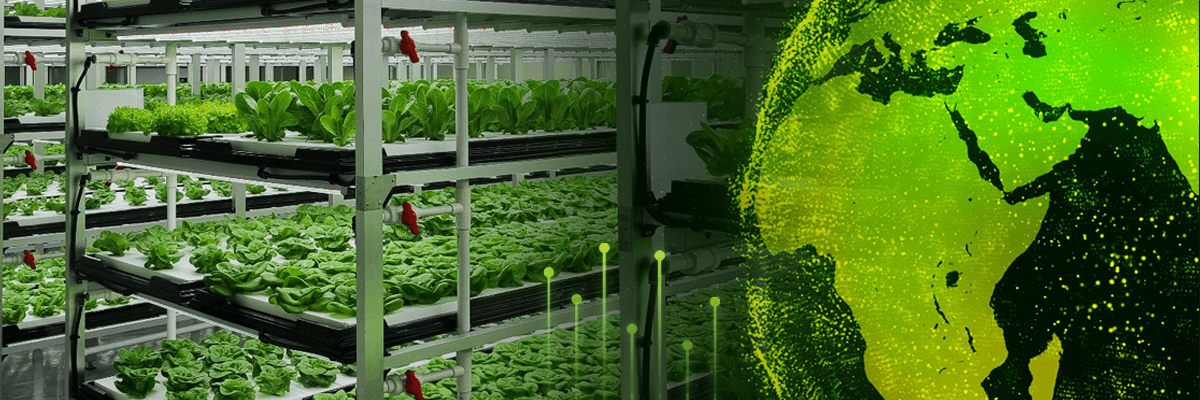
Smart farming technology represents a futuristic agricultural innovation that surpasses traditional crop cultivation, maximizing efficiency and sustainability. Among these innovations, vertical farming has garnered international interest, with leading nations investing heavily in precision agriculture development. This article examines the government-supported initiatives in the United States, the Netherlands, and Japan, analyzing how each country has established its foothold in vertical farming through national policies and research.
As a free-market economy, the United States began introducing noteworthy vertical farming policies in 2019, aiming to enhance its smart agriculture infrastructure. That year, the government launched strategies to digitalize farming, expanding rural internet access and data infrastructure, ensuring technological integration into agriculture at an early stage. To further advance vertical farming, the U.S. established the Specialty Crop Research Initiative (SCRI), offering up to $2 million in grants over a four-year period for qualifying vertical farming facilities. Additionally, subsidies are provided to farmers, gardeners, government officials, schools, and other stakeholders planning urban or suburban IoT agriculture projects, with up to $300,000 in funding for projects spanning up to three years. This ongoing financial support has facilitated the expansion of vertical farming operations nationwide.
The Netherlands is particularly remarkable in the vertical farming sector despite its small land area—ranking as one of the top agricultural exporters, competing directly with Brazil and the United States. The country’s strategic success stems from its emphasis on agricultural innovation, developing vertical farming and seedling cultivation technologies to ensure stable crop production despite climate constraints.
A key Dutch innovation in vertical farming is the circulating hydroponic system, which significantly improves water conservation in farming—a technique also incorporated in South Korea’s Nongshim Farm vertical farm technology. The widespread development of hydroponics in the Netherlands is largely attributed to strong industry-academic collaboration, with institutions like Wageningen University & Research (WUR) partnering with vertical farm specialists such as Growy for joint R&D efforts. This company is also actively expanding its research team, planning to integrate robotics into vertical farming.
Japan is less recognized in the field of vertical farming compared to the United States and the Netherlands, but it has shown just as much interest in developing the technology. Like many other nations, including South Korea, Japan has implemented strict land-use regulations to preserve domestic agricultural production and limit farmland conversion for alternative purposes.
In 2018, Japan revised its laws to promote plant factory technologies, focusing on standardized shelf hydroponic cultivation, mobile cart harvesting systems, and greenhouse environment control solutions. The government introduced the “Smart Agriculture Implementation Program,” which provides full financial subsidies (up to 100% of costs) to agricultural technology providers, farms, local governments, and research institutions participating in collaborative smart agriculture projects. Building on these initiatives, Japan launched the “Smart Greenhouse Transition Support Program” in 2021 to upgrade existing greenhouses across the country. Through this policy, traditional greenhouse facilities were equipped with new smart technologies, expanding the presence of smart greenhouses nationwide.
The three leading nations in vertical farming demonstrate a shared commitment to financial subsidies, institutional cooperation, and industry-academic collaborations as fundamental components of their growth strategies. South Korea, however, still faces economic barriers to vertical farm implementation, making policy adjustments essential before widespread adoption. Rather than focusing solely on regulatory reforms, addressing knowledge accessibility among older-generation farmers and fostering connections between young innovators and experienced agricultural professionals could be key to expanding vertical farming in South Korea. By bridging generational gaps and enhancing technological education, South Korea has the potential to accelerate its position in global smart farming innovation.
The Netherlands is particularly remarkable in the vertical farming sector despite its small land area—ranking as one of the top agricultural exporters, competing directly with Brazil and the United States. The country’s strategic success stems from its emphasis on agricultural innovation, developing vertical farming and seedling cultivation technologies to ensure stable crop production despite climate constraints.
A key Dutch innovation in vertical farming is the circulating hydroponic system, which significantly improves water conservation in farming—a technique also incorporated in South Korea’s Nongshim Farm vertical farm technology. The widespread development of hydroponics in the Netherlands is largely attributed to strong industry-academic collaboration, with institutions like Wageningen University & Research (WUR) partnering with vertical farm specialists such as Growy for joint R&D efforts. This company is also actively expanding its research team, planning to integrate robotics into vertical farming.
Japan is less recognized in the field of vertical farming compared to the United States and the Netherlands, but it has shown just as much interest in developing the technology. Like many other nations, including South Korea, Japan has implemented strict land-use regulations to preserve domestic agricultural production and limit farmland conversion for alternative purposes.
In 2018, Japan revised its laws to promote plant factory technologies, focusing on standardized shelf hydroponic cultivation, mobile cart harvesting systems, and greenhouse environment control solutions. The government introduced the “Smart Agriculture Implementation Program,” which provides full financial subsidies (up to 100% of costs) to agricultural technology providers, farms, local governments, and research institutions participating in collaborative smart agriculture projects. Building on these initiatives, Japan launched the “Smart Greenhouse Transition Support Program” in 2021 to upgrade existing greenhouses across the country. Through this policy, traditional greenhouse facilities were equipped with new smart technologies, expanding the presence of smart greenhouses nationwide.
The three leading nations in vertical farming demonstrate a shared commitment to financial subsidies, institutional cooperation, and industry-academic collaborations as fundamental components of their growth strategies. South Korea, however, still faces economic barriers to vertical farm implementation, making policy adjustments essential before widespread adoption. Rather than focusing solely on regulatory reforms, addressing knowledge accessibility among older-generation farmers and fostering connections between young innovators and experienced agricultural professionals could be key to expanding vertical farming in South Korea. By bridging generational gaps and enhancing technological education, South Korea has the potential to accelerate its position in global smart farming innovation.
Korea Institute of Planning and Evaluation for Technology in Food, Agriculture and Forestry, 「Domestic and International Trends and Development Directions of Vertical Farms」, 『2024-02, Industry, Technology, and Policy Trend Report』